
Home > Industry Information > Stator:Everything You Should To Know
This passage provides a comprehensive overview of stators, a critical component in electromechanical systems. It begins with foundational definitions, including the stator’s identity, working principle, core functions, and operational importance. The content then delves into practical aspects such as common faults and corresponding repair methods, followed by a detailed breakdown of its applications across various industries. Finally, it summarizes the stator’s irreplaceable role in modern technology, serving as a concise yet thorough guide for understanding this key component.
2.1What is a stator
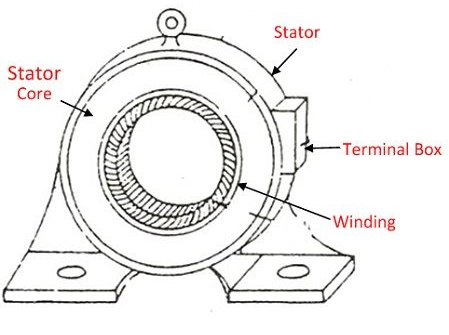
A stator is a stationary (non-rotating) component in electromagnetic devices, primarily found in electric motors, generators, and alternators. Structurally, it typically consists of three main parts: a cylindrical iron core (composed of stacked laminated silicon steel sheets to reduce eddy current losses), copper or aluminum wire windings (arranged in slots around the core), and a frame that supports and houses these components. Unlike the rotor—the rotating counterpart in such devices—the stator maintains a fixed position while interacting magnetically with the rotor to facilitate energy conversion.
2.2Working principle
The stator operates on the principle of electromagnetic induction and magnetic field interaction, with its exact mechanism varying slightly between motors and generators.
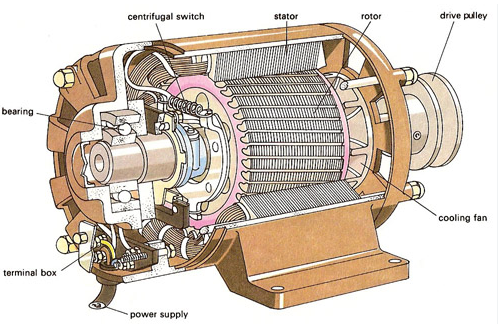
In Electric Motors:When an alternating current (AC) is supplied to the stator windings, it creates a rotating magnetic field (RMF) that rotates at a speed proportional to the frequency of the current (known as synchronous speed). This rotating magnetic field induces a current in the rotor (via electromagnetic induction in induction motors) or interacts with the rotor's permanent magnets (in synchronous motors), generating a torque that drives the rotor to rotate.
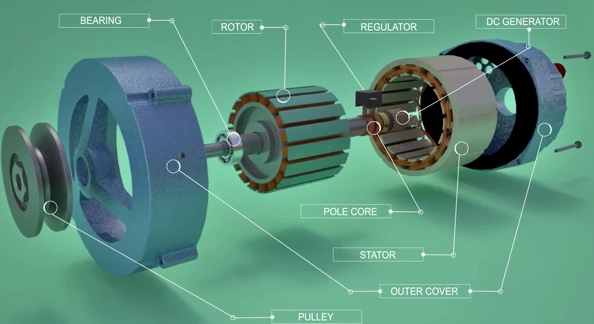
In Generators/Alternators:The rotor—either equipped with permanent magnets or excited by a DC current—rotates within the stator. As the rotor's magnetic field cuts across the stator windings,it induces an alternating current in the windings, converting mechanical energy (from sources like turbines or engines) into electrical energy.
2.3Functions
Magnetic Field Generation:In motors, it produces the rotating magnetic field necessary to drive rotor motion;in generators,it serves as the "field interaction partner" for the rotating rotor to induce electricity.
Energy Conversion Medium:It acts as the key interface for energy transformation—converting electrical energy to mechanical energy(motors) or mechanical energy to electrical energy (generators).
Structural Support:Its frame provides mechanical stability for the entire device, securing the windings and core while aligning with the rotor to ensure efficient magnetic coupling.
2.4importance
Efficiency Driver:The design of the stator (e.g.,winding configuration, core material) directly impacts energy conversion efficiency—poor stator design leads to higher energy losses (eddy current, hysteresis) and reduced system performance.
Reliability Foundation:As a stationary component,it is less prone to wear than the rotor, but its integrity is critical:damaged windings or core laminations can cause system failure, overheating,or even fire.
Application Versatility Enabler:Its adaptability (e.g.,variable winding designs,material selections) allows electromechanical devices to meet diverse requirements—from high-torque industrial motors to compact automotive alternators.
3.1Winding Insulation Failure
Causes:Overheating (due to overload or poor ventilation), moisture ingress, or aging of insulation materials.
Symptoms:Short circuits between windings (tripped circuit breakers), ground faults (current leakage to the stator frame),or reduced device efficiency.
Repair Methods:
Identify damaged sections using a megohmmeter (to test insulation resistance) or infrared thermography.
Replace damaged windings by rewinding the affected slots with insulation-coated wire.
Apply insulating varnish to the rewound windings and cure them to restore insulation integrity.
3.2Winding Open Circuit
Causes:Wire breakage (due to vibration, thermal expansion/contraction, or manufacturing defects) or poor solder joints in winding connections.
Symptoms:Motor failure to start (no torque generation) or generator output drop to zero.
Repair Methods:
Locate the break point via continuity testing with a multimeter.
Solder broken wires (for minor breaks) or rewind the entire coil (for extensive damage).
Reinforce connections with heat-shrink tubing to prevent future breakage.
3.3Core Lamination Damage
Causes:Physical impact (e.g.,rotor misalignment leading to friction), overheating (melting insulation between laminations), or corrosion.
Symptoms:Increased eddy current losses(overheating,reduced efficiency) or abnormal noise during operation.
Repair Methods:
Clean corroded laminations with a non-abrasive solvent.
Re-separate fused laminations using a thin blade (if damage is minor) and reapply insulating paint.
Replace severely damaged core sections (common in high-power devices) to restore magnetic efficiency.
3.4Bearing or Shaft Misalignment (Indirect Stator Damage)
Causes:Wear of rotor bearings, improper installation,or mechanical vibration.
Symptoms:Rotor rubbing against the stator (known as "rubbing stator"), uneven winding wear, or abnormal noise.
Repair Methods:
Replace worn bearings and realign the rotor shaft using precision tools (e.g.,dial indicators).
Inspect the stator for rub marks—file down minor scratches and re-insulate affected areas.
Reinforce the device’s mounting structure to reduce vibration.
5.1Industrial Machinery
Use Case: Integrated into induction motors for pumps, conveyors, compressors, and machine tools.
Why Stator Matters: High-torque stator designs enable heavy-load operation, while laminated cores minimize energy losses, supporting 24/7 industrial productivity.
5.2Automotive Industry
Use Case:Key component in automotive alternators (to generate electricity for batteries and electrical systems) and electric vehicle (EV) traction motors.
Why Stator Matters:Compact, high-efficiency stators in EVs maximize range by reducing energy waste,while durable designs withstand engine bay vibrations and temperature fluctuations.
5.3Power Generation
Use Case:Central component in thermal, hydro, and wind turbines (generators) and backup diesel generators.
Why Stator Matters:Large-scale stator windings handle high current outputs, converting mechanical energy from turbines into grid-compatible electricity; robust insulation ensures reliability in outdoor or harsh environments.
5.4Household Appliances
Use Case:Found in washing machines, refrigerators, air conditioners, and vacuum cleaners (small electric motors).
Why Stator Matters:Compact stator designs fit into appliance casings, while low-noise windings ensure quiet operation;energy-efficient cores meet household energy-saving standards.
5.5Renewable Energy Systems
Use Case:Critical in wind turbine generators and solar inverters (to stabilize AC output).
Why Stator Matters:Wind turbine stators are engineered to handle variable rotor speeds, maintaining consistent power output;corrosion-resistant materials (e.g.,epoxy-coated windings) endure outdoor conditions.
5.6Marine and Aerospace
Use Case:Used in ship propulsion motors, aircraft auxiliary power units (APUs), and satellite power systems.
Why Stator Matters:High-temperature resistant materials (e.g., ceramic insulation) withstand extreme aerospace environments, while lightweight designs reduce fuel consumption in marine and aviation applications.
The stator is a foundational, stationary component that enables energy conversion in electric motors, generators, and alternators, operating on electromagnetic induction and magnetic field interaction principles. Its core functions—magnetic field generation, energy conversion, and structural support—make it critical to system efficiency and reliability.
Industry Information