
Home > Industry Information > Explore The Role Of Purge Valve
1.1what is a Purge Valve
A Purge Valve is a mechanical or electromechanical device designed to control the flow of gases or fluids for the purpose of purging, which refers to the process of removing unwanted substances such as contaminants, moisture, residual gases, or debris from a system, pipeline, or equipment. It acts as a switch that can be opened or closed to allow a purging medium (typically an inert gas like nitrogen, clean air, or a specific fluid) to flow through the target area, flushing out the unwanted elements and ensuring the system remains clean, functional, and safe.

1.2the importance of Purge Valve
The Purge Valve holds significant importance in various industrial, scientific, and medical applications. Firstly, it helps maintain the purity and integrity of systems by eliminating contaminants that could otherwise compromise the performance, accuracy, or lifespan of equipment. For example, in precision manufacturing processes, even tiny particles or residual gases can lead to product defects. Secondly, it enhances safety by removing potentially hazardous substances such as explosive gases, corrosive materials, or toxic residues, reducing the risk of accidents, equipment damage, or harm to personnel. Additionally, it ensures the reliability and consistency of operations, as a clean and unobstructed system is less likely to experience malfunctions or unexpected downtime, thereby improving overall efficiency and reducing maintenance costs.
The working principle of a Purge Valve revolves around controlling the flow of a purging medium to flush out unwanted substances. When the valve is in the closed position, it blocks the flow of the purging medium, preventing it from entering the system or pipeline. When a purge cycle is initiated (either manually, automatically via a control system, or triggered by specific conditions such as pressure, time, or sensor readings), the valve opens, allowing the purging medium to flow into the target area.As the purging medium passes through, it displaces and carries away contaminants, moisture, or residual gases. The flow rate and duration of the purge are often controlled to ensure effective removal of unwanted substances. Once the purge cycle is complete, the valve closes again, stopping the flow of the purging medium and isolating the system from the purging source. Some advanced Purge Valves are equipped with sensors or feedback mechanisms to monitor the purging process, ensuring that the system reaches the desired level of cleanliness before closing.
3.1Functions of Purge Valve in a Car
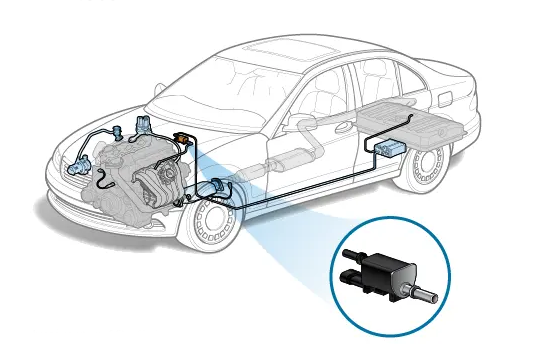
Regulate fuel vapor flow:The purge valve controls the flow of fuel vapors from the car's evaporative emission (EVAP) canister to the engine. When the engine is running under specific conditions (such as warm-up or steady speed), the valve opens, allowing the stored fuel vapors to be drawn into the engine's combustion chamber. This prevents the vapors from being released into the atmosphere, reducing harmful emissions.
Prevent fuel vapor leakage:It acts as a seal when closed, preventing fuel vapors from escaping from the EVAP system. This ensures that volatile organic compounds (VOCs) in the fuel vapors, which are pollutants, do not leak out, helping the car meet emission standards.
Optimize engine performance:By precisely controlling the amount of fuel vapor entering the engine, the purge valve helps maintain the correct air-fuel ratio. This ensures efficient combustion, which in turn improves fuel economy and prevents rough idling, hesitation, or stalling that could occur if too much or too little vapor is introduced.
Protect the EVAP system:The valve prevents excessive pressure buildup in the EVAP canister and related components. Without it, pressure could accumulate, potentially damaging hoses, gaskets, or the canister itself, leading to costly repairs.
Support emission control systems:It works in conjunction with other components of the EVAP system, such as the charcoal canister and vent valve, to comply with environmental regulations. By directing fuel vapors to the engine for burning, the purge valve reduces the car's overall emissions, contributing to cleaner air.
3.2Application of specific vehicle models
Toyota Camry (2018-present):In the 2018 and later Toyota Camry models equipped with the 2.5L Dynamic Force Engine, the purge valve is a key component of the evaporative emission control system. It is typically located near the intake manifold and is controlled by the Engine Control Unit (ECU). When the engine reaches operating temperature and is running at a steady speed, the ECU triggers the purge valve to open, allowing fuel vapors stored in the charcoal canister to be drawn into the combustion chamber. This not only reduces hydrocarbon emissions but also improves fuel efficiency by utilizing the vaporized fuel. A faulty purge valve in this model can lead to issues like rough idling, increased fuel consumption, or the illumination of the Check Engine Light (CEL) with codes such as P0441 (Evaporative Emission System Purge Flow Malfunction).
Ford F-150 (2021-present):The Ford F-150, especially those with the 3.5L EcoBoost V6 engine, uses a purge valve to manage fuel vapors in its advanced EVAP system. Positioned between the charcoal canister and the intake manifold, this valve operates in response to various driving conditions. During highway cruising, the valve opens more frequently to purge accumulated vapors, ensuring efficient combustion. Off-road or during heavy loads, the ECU adjusts the valve's operation to maintain optimal air-fuel ratios. The purge valve in the F-150 is designed to withstand harsh underhood conditions, including high temperatures and vibrations, ensuring reliable performance. A malfunction here may result in decreased engine power and failed emissions tests.
Volkswagen Golf GTI (2020-present):In the 2020 and newer Volkswagen Golf GTI with the 2.0L TSI engine, the purge valve plays a crucial role in meeting strict European emission standards. It is integrated into a compact EVAP module and works in conjunction with a pressure sensor to monitor and control vapor flow. The valve's precise opening and closing timing are calibrated to match the turbocharged engine's needs, preventing fuel vapor-related issues that could affect turbocharger performance. If the purge valve fails, the Golf GTI may experience hesitation during acceleration and trigger diagnostic trouble codes like P0446 (Evaporative Emission System Vent Control Circuit Malfunction).
Fault 1: Valve sticking (failure to open or close properly)
This can occur due to the buildup of contaminants, corrosion, or wear of internal components.
Solution: Regular maintenance, including cleaning the valve with appropriate solvents to remove contaminants. If corrosion or wear is severe, replacing the worn parts or the entire valve may be necessary. Additionally, using a purging medium that is compatible with the valve materials can help prevent corrosion.
Fault 2: Leakage
Leakage may happen when the valve seat is damaged, the sealing gasket is worn, or there is improper installation.
Solution: Inspect the valve seat and sealing gasket for damage. Replace worn gaskets or repair damaged seats. Ensure the valve is installed correctly according to the manufacturer's instructions, with proper tightening of connections to prevent leaks.
Fault 3: Inconsistent flow during purging
This could be caused by a clogged valve, a malfunctioning actuator (in electromechanical valves), or incorrect settings of flow control parameters.
Solution: Check for clogs and clean the valve if necessary. For electromechanical valves, test the actuator to ensure it is functioning properly; replace the actuator if it is faulty. Adjust the flow control settings (such as pressure or duration) to ensure a consistent and effective purge.
In summary, the Purge Valve is a vital component in numerous industries, serving the key function of purging unwanted substances from systems and equipment. Its ability to control the flow of purging media ensures the cleanliness, safety, and reliability of operations.From its basic definition as a flow control device for purging to its significant role in maintaining system integrity, the Purge Valve operates on a straightforward yet effective principle of displacing contaminants. While it may encounter common faults like sticking, leakage, or inconsistent flow, these can be addressed through regular maintenance and proper troubleshooting. Overall, the Purge Valve is an indispensable device that contributes to the efficiency, safety, and success of various processes and systems.
Industry Information