
Home > Industry Information > Exploring The Role Of Voltage Source Converters
1.1What is the voltage source converter
A voltage source converter (VSC) is a power electronic device that can convert electrical energy between direct current (DC) and alternating current (AC) in a bidirectional manner. It operates based on the principle of using a DC voltage source (such as a battery or a capacitor) to generate an AC output with controllable amplitude, frequency, and phase, or to convert AC input into a stable DC output. Unlike current source converters, VSC maintains a relatively stable DC voltage at its input, which allows for more flexible and precise control of the output power.
1.2The Importance of Voltage Source Converter
The voltage source converter holds significant importance in modern power systems and various electronic applications. In the context of the growing demand for clean energy and the development of electric transportation, VSC plays a crucial role in integrating renewable energy sources into the grid, enabling efficient energy conversion in electric vehicles, and improving the stability and controllability of power systems. It facilitates the smooth transfer of electrical energy between different forms, ensuring that energy is utilized efficiently and reliably, which is essential for the transition to a more sustainable and electrified world.
The working principle of a voltage source converter revolves around the use of power electronic switches, typically insulated-gate bipolar transistors (IGBTs), which are controlled by pulse-width modulation (PWM) signals. When converting DC to AC (inversion mode), the VSC uses these switches to rapidly turn on and off, shaping the DC voltage from the source into a series of voltage pulses. By adjusting the width, frequency, and sequence of these pulses, the converter can synthesize an AC output that approximates a sine wave with the desired amplitude and frequency.
In the reverse process, when converting AC to DC (rectification mode), the VSC rectifies the incoming AC voltage by controlling the switching of the IGBTs, converting it into a stable DC voltage. A key component in the VSC is the DC-link capacitor, which acts as a voltage source, maintaining a constant DC voltage across the converter terminals and absorbing voltage fluctuations during the conversion process. This combination of switching control and energy storage in the DC-link capacitor allows the VSC to achieve precise and efficient energy conversion.
Power conversion for traction motor operation:The high-voltage battery pack in an electric vehicle (like a Tesla Model 3, which has a 400V battery system) stores energy in DC form, but the traction motor that drives the wheels runs on AC power. The VSC converts the DC power from the battery into three-phase AC power. By precisely adjusting the frequency and amplitude of this AC output, it controls the motor's speed and torque. For example, when the driver presses the accelerator pedal, the VSC increases the frequency of the AC power supplied to the motor. If the frequency rises from 50Hz to 100Hz, the motor's rotational speed doubles, leading to faster acceleration of the vehicle. Conversely, when the driver releases the accelerator, the VSC reduces the frequency, decreasing the motor speed and causing the vehicle to decelerate smoothly.
Energy recovery during regenerative braking:When an electric vehicle (such as a Nissan Leaf) is braking, the traction motor switches to generator mode, converting the kinetic energy of the moving vehicle into AC electrical energy. The VSC then acts as a rectifier, converting this AC energy into DC power. This DC power is fed back into the battery pack for storage. For instance, when the vehicle is approaching a red light and the driver applies the brakes, the VSC converts the AC generated by the motor into DC, which recharges the battery. This process can recover up to 20% of the energy that would otherwise be wasted as heat through traditional friction braking, significantly extending the vehicle's driving range.
Regulation of power flow for auxiliary systems:Electric vehicles have various auxiliary components, including the infotainment system, air conditioning, and lighting, which typically operate on low-voltage DC (12V or 48V). The VSC helps manage the power flow between the high-voltage battery and these low-voltage systems. For example, in a Hyundai Kona Electric, the VSC works with a DC-DC converter to step down the high voltage from the battery to the 12V required by the car's lights. It also stabilizes the voltage supplied to these components, preventing voltage spikes. If there is a sudden surge in power demand from the air conditioning system, the VSC adjusts the power flow to ensure the voltage remains stable, protecting sensitive electronics like the car's navigation system from damage.
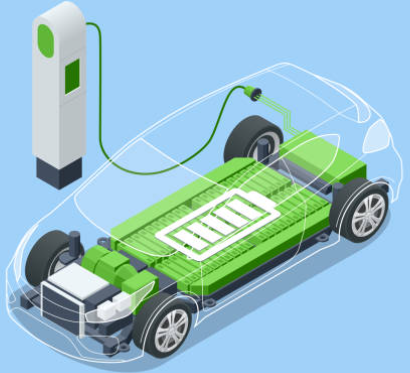
Supporting multiple driving modes through power conversion:In a hybrid electric vehicle (HEV) like the Toyota Prius, the VSC converts DC power from the battery to AC power to drive the electric motor. This enables the vehicle to operate in electric-only mode for short distances, such as when driving in a residential area at low speeds (up to 25 mph). When more power is needed, like during highway acceleration, the VSC provides additional AC power to the electric motor to assist the internal combustion engine, reducing the load on the engine and improving fuel efficiency. For example, when merging onto a highway, the engine and electric motor work together, with the VSC ensuring the electric motor receives the right amount of AC power to complement the engine's output.
Facilitating bidirectional power flow for battery charging:The VSC in an HEV (such as a Honda Insight) enables power to flow between the engine, motor, and battery. When the engine is running and the battery's charge is low, the engine drives the motor as a generator, producing AC power. The VSC converts this AC power into DC, which is used to charge the battery. For instance, during a long highway drive where the electric motor is not frequently used, the engine's excess power is converted by the VSC into DC to recharge the battery, ensuring it has enough energy for later use in electric-only mode when the vehicle enters a city.
Enabling smooth mode transitions:HEVs need to switch between different operating modes, such as engine-only, electric-only, or a combination of both. The VSC plays a key role in making these transitions seamless. Take a Ford Escape Hybrid as an example: when the vehicle starts from a stop, it initially operates in electric-only mode, with the VSC supplying AC power to the motor from the battery. As the vehicle gains speed and the engine kicks in, the VSC adjusts the power flow to integrate the engine's power with the electric motor's output. It ensures there is no sudden jerk or loss of power during the transition, providing a smooth driving experience. This smooth switching also helps optimize fuel consumption; for example, when cruising at a constant speed, the VSC balances the power from the engine and motor to keep fuel usage to a minimum.

In summary, voltage source converters are vital power electronic devices that enable efficient and precise conversion between DC and AC power. Their working principle, based on controlled switching and energy storage in a DC-link capacitor, allows for flexible energy management in various applications.In electric vehicles, VSCs are essential for powering the traction motor, enabling regenerative braking, and optimizing energy efficiency. In hybrid electric vehicles, they play a key role in integrating the internal combustion engine and electric motor, facilitating power flow between components, and enhancing overall vehicle performance and efficiency.As the demand for electrified transportation continues to grow, the importance of voltage source converters in enabling reliable, efficient, and high-performance vehicles becomes increasingly evident, making them a cornerstone of modern automotive technology.
Industry Information