
Home > Industry Information > Understand The Crankshaft Sensor
Ⅰ.Overview of passage
The crankshaft position sensor is a key component in modern automotive engine management systems. It plays a pivotal role in ensuring the engine operates with precision by monitoring the crankshaft's position and rotational speed. This article will explore what the crankshaft position sensor is, its different types, the main functions of the crankshaft it interacts with, its working principle, application fields with specific examples, and conclude with a summary to provide a comprehensive understanding of this essential device.
Ⅱ.Introduction
2.1 What is crankshaft sensor
The crankshaft position sensor is an electronic device installed in close proximity to the crankshaft in an internal combustion engine. Its primary purpose is to detect and transmit real-time information about the crankshaft's angular position and rotational speed to the Engine Control Unit (ECU). This data is critical for the ECU to control fuel injection timing, ignition timing, and other vital engine operations, ensuring optimal performance, fuel efficiency, and emissions control.
2.2 Type of crankshaft sensor
Magnetic induction sensor: This type uses a permanent magnet, a coil, and a reluctor ring (mounted on the crankshaft). As the reluctor ring rotates, it disrupts the magnetic field around the coil, inducing an alternating current (AC) signal in the coil. The frequency and amplitude of this signal correspond to the crankshaft's speed and position.

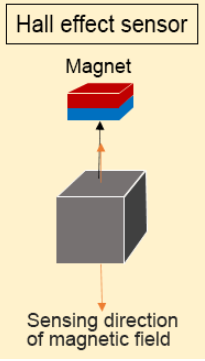
Hall-effect sensor: It consists of a Hall element, a magnet, and a trigger wheel. When the trigger wheel's teeth pass between the Hall element and the magnet, they interrupt the magnetic field, causing a voltage change in the Hall element. This produces a digital signal (on/off) that the ECU interprets to determine position and speed.
Optical sensor: This sensor uses a light source (such as an LED), a photodiode, and a slotted disc attached to the crankshaft. As the disc rotates, light passes through the slots and is detected by the photodiode, generating a pulsed signal. The pattern of pulses indicates the crankshaft's position and speed.
Ⅲ.Main functions of crankshaft
While the crankshaft position sensor monitors the crankshaft, the crankshaft itself has several core functions in the engine:
Converts linear motion to rotational motion: It transforms the reciprocating linear movement of the pistons (driven by the combustion of fuel) into rotational motion, which is transmitted to the transmission and ultimately to the vehicle's wheels to propel it forward.
Drives auxiliary components: The crankshaft powers various auxiliary systems, such as the oil pump, water pump, and alternator, via belts or chains, ensuring these components function properly to lubricate, cool, and charge the engine.
Maintains engine balance: Through its design, including counterweights, the crankshaft helps balance the forces generated by the moving pistons and connecting rods, reducing vibration and ensuring smooth engine operation.
Ⅳ.Working principle of crankshaft sensor
Regardless of the type, the basic working principle of the crankshaft position sensor revolves around detecting changes in the crankshaft's motion and converting them into electrical signals for the ECU.
For magnetic induction sensors, the rotation of the reluctor ring (with its teeth and gaps) causes fluctuations in the magnetic field, inducing an AC voltage in the coil.
Hall-effect sensors rely on the Hall effect, where a voltage difference is created across a conductor when exposed to a magnetic field and current, with the trigger wheel interrupting the field to produce a digital signal.
Optical sensors use light interruption by the slotted disc to generate pulsed electrical signals. In all cases, the ECU analyzes the frequency, timing, and pattern of these signals to precisely determine the crankshaft's position (e.g., when a piston is at Top Dead Center) and rotational speed (RPM), then uses this information to adjust fuel injection and ignition timing accordingly.
Ⅴ.Application Field
Crankshaft position sensors are widely used in various internal combustion engine-powered vehicles and equipment, including:
1.Passenger cars: In passenger cars, which are designed for daily commuting, comfort, and fuel efficiency, the crankshaft position sensor is crucial for maintaining smooth engine operation across diverse driving conditions—from city traffic to highway cruising. It ensures that fuel injection and ignition timing are optimized to balance power output and fuel consumption while minimizing emissions.
For example, the Honda Civic, a popular compact car, employs a Hall-effect crankshaft position sensor in its 1.5L turbocharged engine. This sensor continuously feeds data to the ECU, allowing it to adjust the fuel injection duration and ignition timing in real-time. During acceleration, it ensures a richer fuel mixture for extra power, while during steady cruising, it leans out the mixture to enhance fuel efficiency, contributing to the Civic's reputation for balanced performance and low running costs.
2.Trucks and commercial vehicles: Heavy-duty trucks and commercial vehicles, such as delivery trucks, tractor-trailers, and buses, operate under high loads and for extended periods, requiring engines to deliver consistent power and durability. The crankshaft position sensor here plays a vital role in managing the engine's performance under heavy stress, preventing overheating, and ensuring efficient fuel usage to reduce operational costs.
Take the Mercedes-Benz Actros, a leading long-haul truck, as an example. Its 12.8L inline-six diesel engine uses a magnetic induction crankshaft position sensor. When the truck is hauling heavy cargo up steep gradients, the sensor provides rapid updates on crankshaft speed and position to the ECU. The ECU responds by adjusting the injection timing to ensure complete fuel combustion, maximizing torque output to handle the load. Additionally, during idling at loading docks, the sensor helps the ECU maintain a stable low idle speed, reducing fuel waste and noise pollution.
3.Motorcycles: Motorcycles, with their compact engines and emphasis on agility and throttle response, depend on the crankshaft position sensor to deliver precise engine control, especially during quick acceleration and deceleration. The sensor ensures that the engine responds instantaneously to rider inputs, enhancing both performance and safety.
The Yamaha YZF-R1, a high-performance sport motorcycle, is a notable example. Equipped with an optical crankshaft position sensor, it works in tandem with the ECU to manage the 998cc crossplane crankshaft engine. During aggressive riding, such as leaning into corners or accelerating out of them, the sensor provides microsecond-accurate position data. This allows the ECU to adjust ignition timing with exceptional precision, preventing misfires and ensuring that the engine's power is delivered smoothly to the rear wheel, which is critical for maintaining traction and rider control at high speeds.
Ⅵ.Summary
The crankshaft position sensor is an indispensable component in modern engine systems, providing critical data to the ECU for optimal engine operation. From its definition as a device monitoring crankshaft position and speed to its three main types (magnetic induction, Hall-effect, optical), each with distinct working principles, it plays a key role in regulating fuel injection and ignition timing. While the crankshaft itself converts motion and drives auxiliary components, the sensor’s interaction with it is vital. Its applications span passenger cars, commercial vehicles, motorcycles, and industrial engines, ensuring efficient, reliable, and high-performance operation across various platforms. Understanding the crankshaft position sensor helps appreciate the intricate synergy between mechanical and electronic systems in powering modern machinery.
Industry Information