
Home > Industry Information > Pulse - Code Modulation Vs S/PDIF (Sony/Philips Digital Interface)
In the realm of digital audio, Pulse-code modulation (PCM) and S/PDIF (Sony/Philips Digital Interface) are two fundamental elements that play distinct yet interconnected roles. PCM serves as a core method for encoding analog audio into digital form, while S/PDIF functions as a standard interface for transmitting digital audio signals. Understanding their characteristics, similarities, differences, advantages, and application areas is crucial for anyone involved in audio technology, from audio enthusiasts to professionals in the field. This text aims to compare and contrast these two to provide a clear understanding of their roles in digital audio systems.
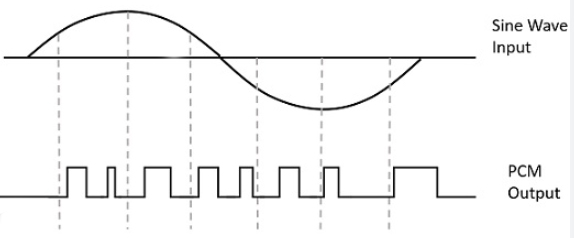
Pulse-code modulation (PCM) is a digital encoding technique used to convert continuous analog audio signals into discrete digital data. The process involves three main steps: sampling, quantizing, and encoding. Sampling takes periodic measurements of the analog signal's amplitude at a specific rate. Quantizing assigns a numerical value to each sample, representing its amplitude. Encoding then converts these numerical values into binary code, which can be stored, transmitted, or processed by digital devices. PCM is considered the fundamental format for digital audio, as it directly represents the audio waveform in a digital manner.
2.2what is spdif
S/PDIF (Sony/Philips Digital Interface) is a digital audio interface standard developed by Sony and Philips. It defines the physical connections, electrical or optical properties, and data transmission protocols for transferring digital audio signals between devices. S/PDIF can use either coaxial cables (with electrical signals) or optical fibers (with light signals) for transmission. Its primary purpose is to facilitate the reliable transfer of digital audio data, including PCM and certain compressed audio formats, between different audio equipment such as CD players, amplifiers, and home theater systems.

2.3similar and difference
Similarities: Both PCM and S/PDIF are integral to digital audio systems and are involved in the handling of digital audio data. They enable the digital processing, transmission, and reproduction of audio, contributing to the widespread use of digital audio in various applications. In many cases, PCM data is transmitted through the S/PDIF interface, creating a functional relationship where S/PDIF serves as a carrier for PCM signals.
Differences:
Nature: PCM is a digital encoding format that represents audio information. It is a way of converting analog audio into digital data. S/PDIF, on the other hand, is an interface standard that governs how digital audio signals are transmitted between devices. It is a communication protocol and physical connection specification.
Function: PCM's main function is to encode analog audio into a digital format for storage, processing, and transmission. S/PDIF's function is to provide a standardized means of transmitting digital audio signals (including PCM and other formats) between devices, ensuring compatibility and reliable data transfer.
Content handled: PCM deals with the actual digital audio data itself, containing the information needed to reconstruct the original analog audio signal. S/PDIF handles the transmission of this digital audio data (which can be PCM or other formats) from one device to another, acting as a conduit rather than the data itself.
High fidelity: PCM can achieve high levels of accuracy in representing the original analog audio signal, especially with high sampling rates and bit depths. This allows for the preservation of fine audio details, resulting in high-quality audio reproduction that is faithful to the source.
Simple processing: As a basic and universal digital audio format, PCM is easy to work with in various digital audio processing systems. It can be readily edited, mixed, and manipulated using software and hardware tools without complex decoding processes.
Wide compatibility: PCM is supported by almost all digital audio devices and platforms, from consumer electronics like smartphones and computers to professional audio equipment such as recording studios and digital mixers. This widespread compatibility makes it a versatile choice for digital audio applications.
3.2spdif advantage
Stable transmission: S/PDIF is designed with good noise immunity, which helps minimize the impact of external electromagnetic interference on the transmitted audio signal. This ensures that the digital audio data arrives at its destination with minimal errors, maintaining signal integrity.
Easy connection: The S/PDIF interface is available in common forms such as coaxial and optical, making it simple for users to connect different audio devices. The cables are easy to obtain and install, requiring no specialized technical knowledge for basic setup.
Support for multiple formats: In addition to transmitting uncompressed PCM audio, S/PDIF can also carry compressed digital audio formats like Dolby Digital and DTS. This flexibility makes it suitable for use in home theater systems and other setups that require handling various audio formats.
Professional audio production: In recording studios, PCM is the standard format for audio recording, editing, and mastering. It provides the high quality and precision needed for professional audio works, ensuring that every detail of the sound is captured and preserved.
High-end audio playback:High-resolution audio players, CD players, and DVD-Audio players often utilize PCM to deliver high-fidelity audio. Audiophiles and music enthusiasts rely on PCM-based playback systems to experience music as close to the original recording as possible.
Digital audio processing: Digital audio workstations (DAWs) and audio editing software use PCM as the primary format for audio data. It allows for a wide range of processing operations, including equalization, effects application, and multi-track mixing.
4.2spdif application field
Home theater systems: S/PDIF is commonly used in home theaters to connect Blu-ray players, set-top boxes, and AV receivers. It enables the transmission of multi-channel audio signals, creating an immersive audio experience for movies and other media.
Consumer audio equipment: Devices such as CD players, digital TVs, game consoles, and computer sound cards often feature S/PDIF outputs. These outputs are used to connect to external amplifiers or speakers, simplifying the audio setup for consumers.
Car audio systems: Some high-end car audio systems employ S/PDIF to transmit digital audio signals, reducing noise interference from the vehicle's electrical system and improving the overall audio quality in the car environment.
In conclusion, Pulse-code modulation (PCM) and S/PDIF (Sony/Philips Digital Interface) are both essential in the digital audio landscape but serve different purposes. PCM is a digital encoding format that converts analog audio into digital data, offering high fidelity, simple processing, and wide compatibility, making it ideal for professional audio production, high-end playback, and digital audio processing. S/PDIF, on the other hand, is an interface standard for transmitting digital audio signals, providing stable transmission, easy connection, and support for multiple formats, which suits it for home theater systems, consumer audio equipment, and car audio setups. While PCM is the underlying data format, S/PDIF acts as a means to transmit that data, and they often work together in audio systems. Understanding their differences and respective strengths helps in selecting the right components and setting up effective digital audio systems for various applications.
Industry Information