
Home > Industry Information > Application Analysis Of Motion Detectors Based On PIR Sensors
A Passive infrared sensor (PIR for short) is an electronic device sensor used to detect and respond to infrared radiation generated by temperature changes in the external environment.
The core detection principle of passive infrared sensors is to use an internal infrared sensor containing heat-sensing semiconductors to detect the temperature of the external environment,
thereby determining whether an object has entered the detection range, and then issue an alarm or perform other operations.
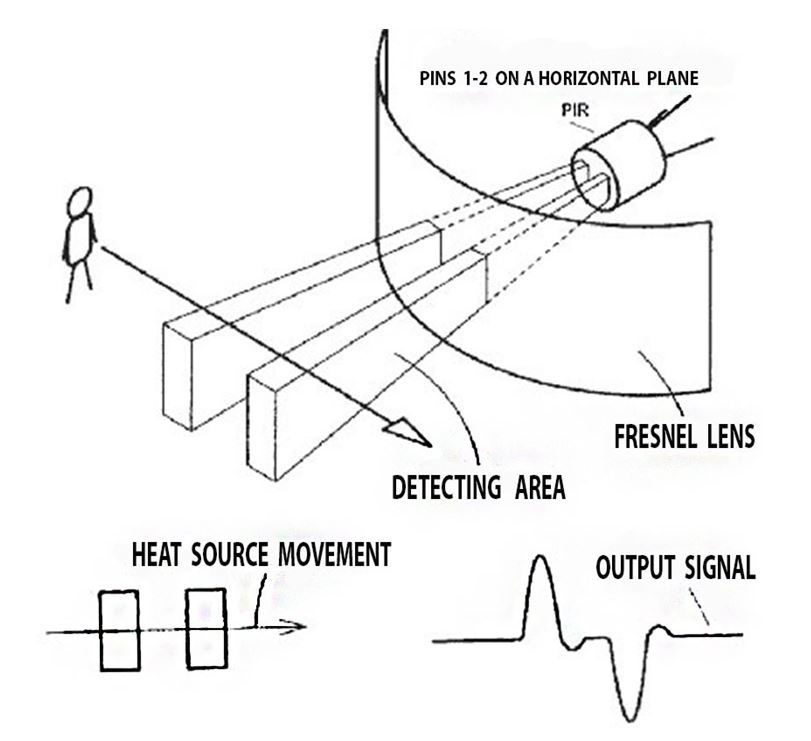
A motion detector, also known as a motion sensor, is an electronic device used to detect the presence or movement of objects around the outside world.
The working principle of a motion detector is to detect the physical changes of objects in the environment due to movement, such as subtle changes in temperature and electromagnetic fields.
Then, it converts these external movement changes into electrical signals, thereby triggering an alarm and sending out signals.
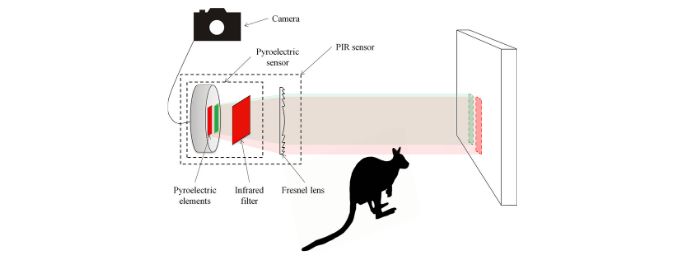
There are various types of motion detectors, and each type has a different working principle. The common types are as follows: microwave motion sensors, contact motion sensors, and vibration sensors.
Below, we will analyze the characteristics of these three common sensors.
· Microwave motion sensor
Microwave motion sensors, also known as radar sensors, work by emitting continuous microwave signals and measuring the changes in these reflected signals to detect motion.
These sensors generate electromagnetic waves with wavelengths ranging from millimeters to meters, typically within the frequency range of gigahertz (GHz).
The emitted microwave signal passes through the surrounding space and interacts with objects and surfaces within the sensor's field of view. When the emitted microwave signal encounters objects or obstacles
such as people or vehicles, part of the microwave energy will be reflected onto the sensor. The receiver of the sensor captures the reflected signal and analyzes factors such as the frequency shift (Doppler effect)
and phase shift of the signal to determine the existence and movement of the object. Once the movement is detected and confirmed, the microwave sensor will trigger actions such as turning on the lights,
sounding an alarm or activating the safety system.
· Motion sensor upon contact
Contact motion sensors, also known as door and window sensor movement sensors, are mainly used to detect the movement of doors and Windows.
Contact sensors use magnets to detect movement and will sound an alarm when doors and Windows are opened.
Sensors are usually composed of two parts: one part is fixed on the door frame or window frame (door frame), and the other part is fixed on the door or window. When the doors and Windows are closed,
these two parts form a closed loop. When the door or window is opened, the two parts of the sensor will separate, thus disconnecting the circuit. When the sensor detects this change, it will trigger an alarm or send an alert to the security system.
·Vibration motion sensor
Vibration motion sensors, also known as seismic sensors, are unique devices used to detect tiny vibrations caused by motion. This type of sensor has a very high sensitivity and mainly detects the tiny vibrations generated
when an object moves through components such as piezoelectric crystals and accelerometers.
Dual-technology motion sensors are a type of motion sensor that combines two or more different sensor technologies. The most common combination is passive infrared (PIR) and microwave (MW) sensors.
Passive infrared sensors work by detecting the heat and movement of the human body. On the other hand, the microwaves emitted by microwave sensor components travel faster than infrared rays,
thus enabling the detection of slight movements that infrared sensors might overlook.
The infrared motion sensor and the microwave sensor must be triggered simultaneously for the dual-technology sensor to record motion and operate. In smart furniture devices,
when sensors detect someone entering the living room and sense the movement and changes of external objects, they will send signals to the smart furniture system to adjust the indoor lighting and temperature.
·Improve security
The motion sensor will detect unauthorized movement and issue an alarm to the control system equipment. In case of an emergency, the alarm system integrated with the surveillance camera can display relevant images while issuing an alarm notification.
·Improve energy efficiency
Motion sensors are used in the integration of security and building management systems. They can automatically turn lights on or off and adjust temperature Settings to save energy and improve energy efficiency.
·Low power consumption
Motion sensors feature high energy efficiency and are highly suitable for battery-powered devices and systems where power consumption is of critical importance.
Their low power consumption can extend the battery life of wireless devices and reduce overall energy costs.
What is the connection between PIR sensors and motion detectors? The following will analyze it from two aspects: working principle and division of labor in application.
Infrared motion sensors, as the core components of motion detectors, are mainly responsible for detecting infrared changes in the environment and converting them into electrical signals.
A motion detector is a complete system that includes a PIR sensor and related circuits, mainly used for detecting and responding to motion.
4.3Work collaboratively
After the infrared sensor detects changes in external infrared radiation, the motion sensor will process these signals and determine whether to trigger an alarm or proceed to the next step based on the preset logical sequence.
A motion detector is a complete system integrating passive infrared sensors and other circuits and logic processing units. It is not only a signal receiver but also the central hub for decision-making and execution.
It conducts in-depth analysis and processing of the signals sent by the PIR sensor, and in combination with the preset logical rules, determines whether to trigger subsequent actions such as alarms, activate lighting,
and adjust temperature. This collaborative and coexisting relationship enables the entire monitoring system to not only have the ability to accurately perceive environmental changes but also respond flexibly according to specific scenarios.
Industry Information