
Home > Industry Information > Introduction And Application Analysis Of Pyroelectric Sensors
Pyroelectric sensors are sensors that can detect the infrared radiation of objects and convert it into electrical signals. They are often used in the fields of human infrared sensing and infrared detection.
Pyroelectric sensors are based on pyroelectric induction, which is the phenomenon that certain objects release electric charges when their temperature changes. When infrared radiation shines on the sensor,
it will cause a change in the object's temperature, generating a change in charge, which in turn is transformed into a voltage signal.

In nature, any object above the absolute temperature (-273K) will produce an infrared spectrum. The wavelengths of infrared energy released by objects at different temperatures are not the same.
Therefore, the infrared wavelength is related to the level of temperature, while the magnitude of the radiated energy is related to the surface temperature of the object.
Pyroelectric sensors work by detecting temperature changes caused by infrared radiation. When a human body or other objects enter the detection range, the infrared radiation they emit is absorbed by the sensor,
causing the temperature to rise. The pyroelectric element thus generates electric charges, forming a weak voltage signal. The signal amplification circuit amplifies and processes these signals,
and finally outputs electrical signals that can be used for control.

The sensitive elements in pyroelectric sensors are composed of pyroelectric materials, with the main types used being single crystals (such as LiTaO3), piezoelectric ceramics (such as PZT), and polymer films (such as PVF2).
When an external infrared light source enters the detection range of the sensor, the infrared radiation it emits will cause the two equivalent capacitors of the sensor's sensitive unit
to generate different polarization charges and output an electrical signal outward.
It is made by coating a thin glass sheet with multiple layers of filter film. The filter window can effectively filter out infrared rays with wavelengths other than 7.0-14μm.
For instance, SCA02-1 has a penetration rate of 70% for infrared rays with wavelengths ranging from 7.5 to 14μm, drops to 65% at 6.5μm, and sharply decreases to 0.1% at 5.0μm.
This effectively ensures the selectivity of infrared rays for the human body and maximizes the prevention of infrared rays in visible light such as sunlight and artificial light from passing through, thus avoiding interference.

When the Fresnel lens is not used, the detection radius of the sensor is less than 2 meters. When equipped with the Fresnel lens, the detection radius of the sensor can reach 10 meters.
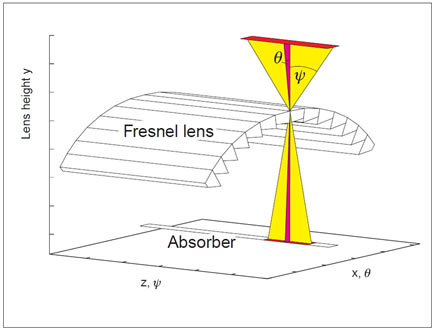
Fresnel lenses are made of common polyethylene and are used to focus infrared radiation, enhancing the sensitivity and detection range of the sensor.
It focuses the infrared radiation from the human body onto the pyroelectric element and simultaneously forms alternating bright and dark areas, enabling the sensor to detect temperature changes.
Since the signals generated by pyroelectric elements are very weak, signal amplification circuits are used to amplify these signals for subsequent processing and output. It usually includes a preamplifier and a filter.
The housing and packaging are used to protect the internal components of the sensor from interference by dust, moisture and other external factors.
The shell is usually made of plastic or metal and has a certain degree of sealing property.
II. Application Scenarios of Pyroelectric Sensors
Automatic induction door: The pyroelectric infrared sensor is the core component in the design of the alarm. It can convert the infrared signal of the human body into an electrical signal for use by the signal processing part.
Signal processing mainly involves amplifying, filtering, delaying and comparing the weak electrical signals output by sensors, laying the foundation for the realization of functions.

Intelligent induction switch: The sensor is applied to a high-performance infrared detector, using a pyroelectric infrared sensor to detect the infrared radiation of a moving human body.
As long as the human body cuts across the detection range, the infrared automatic switch will generate an electrical signal to start the load.
Anti-theft alarm system: The anti-theft alarm wireless intelligent infrared detection and alarm device utilizes signal analysis and processing technology. When an intruder passes through the detection area,
the detector will automatically detect human activities within the area. If there is any dynamic movement phenomenon, it will send an alarm signal to the control host.
Intelligent surveillance cameras: In intelligent surveillance systems, pyroelectric sensors can be used in conjunction with cameras to achieve automatic tracking and alarm functions.
When the sensor detects abnormal movement, the camera will automatically activate and record the relevant images.
Advantages:
1.The pyroelectric infrared sensor itself does not emit any type of radiation and has good concealment.
2.Portable devices suitable for battery power supply, capable of stable operation under low power consumption conditions;
3.Low price.
Disadvantage:
1.The signal amplitude is small and it is prone to interference from various heat sources and light sources.
2.Passive infrared has poor penetration, and the infrared radiation from the human body is easily blocked and not easily received by the probe.
3.It is susceptible to interference from radio frequency radiation.
3.When the ambient temperature is close to the human body temperature, the detection and sensitivity decrease significantly, sometimes causing short-term malfunction.
4.The main movement direction detected by passive infrared detectors is the lateral movement direction, and their detection ability for objects moving in the radial direction is relatively poor.
Industry Information