
Home > Industry Information > Comparative Analysis Between Active Components And Passive Components
When electronic components are in operation, a power source is generated inside them. Such a device is called an active device.
From the perspective of circuit properties, active devices have two basic characteristics:
(1)It also consumes electrical energy by itself.
Active components are semiconductor devices made of semiconductor materials. Representative components include diodes and transistors,
which are electronic devices that perform "active" operations, such as amplification, rectification, and conversion of the supplied current (signal).
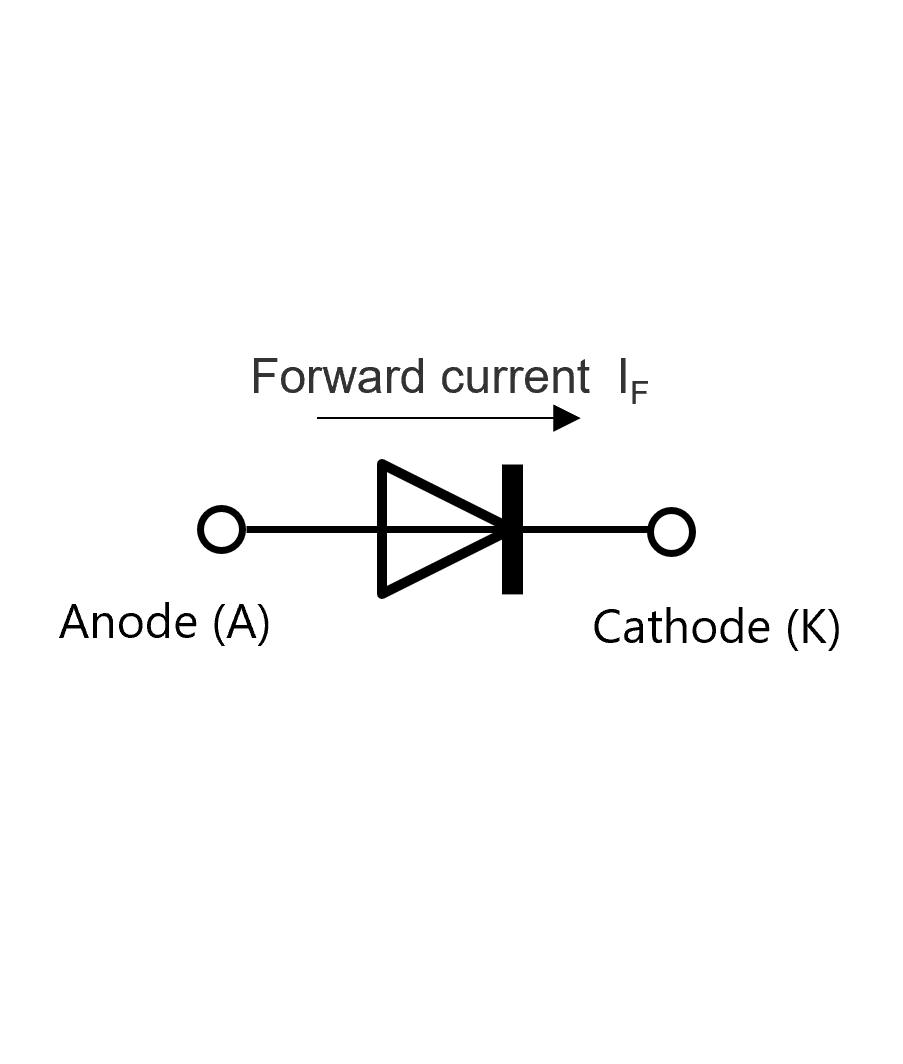
A diode is a component made by combining the P-type and N-type of semiconductors with two materials, namely semiconductors and metals. It has the characteristic of unidirectional conductivity,
meaning that the current flows in one direction while the current in the opposite direction is blocked (rectification characteristic). LED (light-emitting Diode) is also a type of diode.
Although people pay attention to its ability to emit light, the characteristic that current flows only in one direction is the same.
Furthermore, when the reverse current applied to a diode exceeds a certain voltage, the current will flow through, but it has a characteristic that the voltage will not change even if the current flowing through increases (Zener phenomenon).
In circuit designs that take advantage of these characteristics, it is used in rectifier circuits that extract only unidirectional voltage (forward voltage) components from AC power supplies,
detection circuits that extract voice components from radio waves based on the same principle, and voltage control that keeps the DC voltage constant, etc.
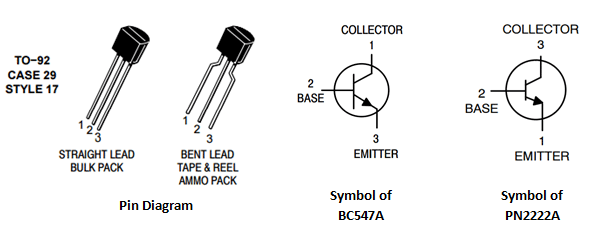
A transistor is composed of alternating P-type and N-type semiconductors. It is a semiconductor device with three terminals, which are called the base (B), collector (C), and emitter (E).
Its function has two characteristics, namely, the amplification characteristic that when there is a small amount of current flowing between the base and the emitter among the three terminals,
there will be a much larger current flowing between the collector and the emitter. Based on the same principle, it takes advantage of the switching characteristic that the current between the collector
and the emitter changes significantly when the current between the base and the emitter varies.
Transistors have a very wide range of applications in circuit design. Besides being used as amplification circuits and switching circuits that take advantage of the above characteristics as they are,
they are also employed as constant voltage circuits that suppress fluctuations in power supply voltage to stabilize it, as well as logic circuits that utilize input and output voltages for logical operations.
A Transformer is a device that uses the principle of electromagnetic induction to change the voltage of alternating current. Its main components include two or more sets of
coils (primary coil and secondary coil) and an iron core. Its functions are to increase or decrease the voltage of alternating current, change impedance and separate circuits.
Transformers are used to change the level of alternating voltage. Such transformers are called step-up type or step-down type and are respectively used to increase or decrease
the voltage level. Transformers can also be used to provide current isolation between circuits and as coupling stages for signal processing circuits.
An operational amplifier is an electronic amplifier with high gain and differential input. It is usually used in applications such as signal amplification, filtering,
comparison and mathematical operations. Operational amplifiers have good linear characteristics and stability and are widely used in analog circuits.

When an electronic component is in operation and no form of power supply is generated inside it, such a component is called a passive component.
From the perspective of circuit properties, passive devices have two basic characteristics:
(1) It either consumes electrical energy by itself or converts electrical energy into other forms of energy in different ways.
(2) It can operate normally only by inputting a signal and does not require an external power supply.
Passive components are fundamental and indispensable electronic devices for performing "passive" operations, such as dissipating, storing or releasing the supplied electricity.
Representative passive components include resistors, capacitors, coils, etc.
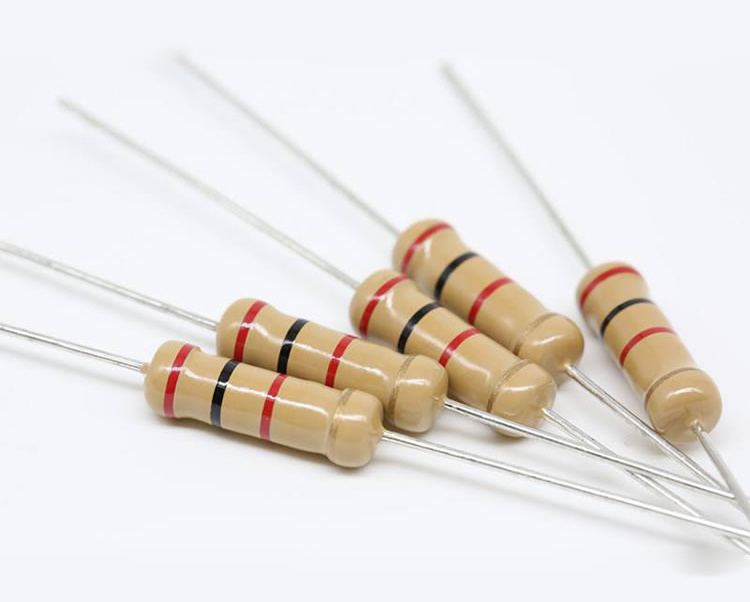
A Resistor is a passive electronic component used to limit the flow of current. Its working principle follows Ohm's Law V=IR, where V represents voltage (V), I represents current (A),
and R is resistance (Ω). The fundamental function of a resistor is to convert electrical energy into thermal energy or other forms of energy, thereby reducing the current flowing through the circuit.
Resistors in circuits usually play the roles of voltage division, current division and current limiting. For signals, both AC and DC signals can pass through resistors.
The main physical characteristic of a resistor is to convert electrical energy into thermal energy. It can also be said that it is an energy-consuming component.
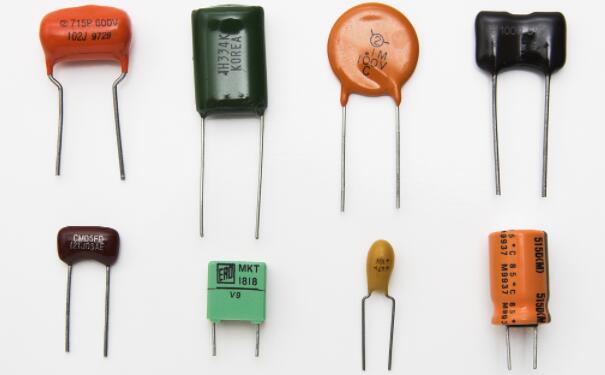
Capacitors are also one of the most common components in electronic circuits. They are components that store electrical energy. A capacitor is composed of two conductors of the same size and material
with an insulating medium sandwiched between them. When a voltage is applied across its two ends, charges will be stored on the capacitor. Once there is no voltage, as long as there is a closed circuit,
it will release electrical energy again. Capacitors prevent direct current from passing through in a circuit while allowing alternating current to pass through. The higher the frequency of alternating current,
the stronger its ability to pass through. Therefore, capacitors are commonly used in circuits for functions such as coupling, bypass filtering, feedback, timing and oscillation.
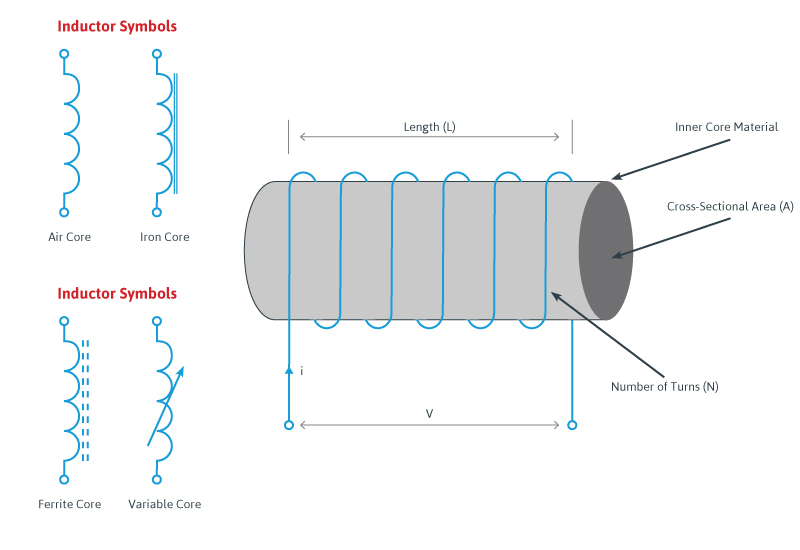
Like capacitors, inductors are also energy storage components. Inductors are generally made of coils. When an alternating voltage is applied across the coil,
an induced electromotive force is generated in the coil, which hinders the change of the current passing through the coil. This kind of obstruction is called inductive reactance.
Inductive reactance is proportional to the inductance and the frequency of the signal. It does not impede direct current (ignoring the direct current resistance of the coil).
Therefore, the role of inductors in electronic circuits is to block current, transform voltage, couple, and when used in conjunction with capacitors for tuning, filtering, frequency selection, frequency division, etc.
Active components and passive components are two different types of electronic components. The main difference between them lies in whether an external power supply is required
to function properly and their roles in the circuit. Active components require an external power supply to function and can actively influence the signals in the circuit.
Passive components do not rely on external power sources and only respond passively to signals in the circuit.
Active components can actively convert external energy into current or power output, thereby enhancing the strength of the signal. Passive components, however,
lack an internal energy conversion mechanism. They can only limit, regulate, and transmit the input signal, and are unable to provide additional energy output.
Active components and passive components play different roles in electronic circuits. Active components can actively generate or enhance signals and have the characteristics
of energy amplification and complexity, such as transistors, operational amplifiers and integrated circuits. Passive components are used to limit, regulate or transmit input signals,
featuring energy consumption and simplicity, such as resistors, capacitors and inductors.
Rectifier diode: A rectifier diode converts the alternating current output by a transformer into direct current. A diode takes advantage of its unidirectional conductivity,
allowing current to pass only in one direction, thereby conducting the positive half of the alternating current and blocking the negative half.
Transformer: As one of the important active components in a DC regulated power supply. It mainly converts high-voltage mains power into low-voltage alternating current through
electromagnetic induction, providing a suitable input voltage for the subsequent rectifier circuit.
Voltage stabilizing chips: Voltage stabilizing chips (such as 7805, LM317, etc.) are the core components of DC regulated power supplies. Its function in a DC voltage stabilizing
circuit is to ensure that the output voltage remains stable when the load changes or the input voltage fluctuates through the internal feedback mechanism and amplification circuit.
Filter capacitor: The filter capacitor is used to remove the AC ripple in the rectified DC current. Capacitors store electrical energy when charging and release it when discharging, thereby smoothing out voltage fluctuations.
Resistance: In a DC regulated power supply, the current-limiting resistor is used to limit the magnitude of the current, thereby protecting other components in the circuit (such as the voltage stabilizing chip) from overcurrent damage.
Inductance: In a DC regulated power supply, inductors can be used for further filtering to remove high-frequency noise. Inductors have a relatively high impedance to high-frequency signals and can effectively suppress high-frequency interference.
Through the analysis of the DC regulated power supply, it can be understood that active components and passive components each play an important role in the circuit.
Active components achieve signal conversion and stabilization through an external power supply and are the core components for the normal operation of the power supply. Passive components,
on the other hand, achieve signal filtering and protection through their own characteristics, ensuring the stability and reliability of the power supply.
Industry Information