
Home > Industry Information > What Is Double Data Rate
This passage provides a comprehensive overview of Double Data Rate (DDR) technology, covering its definition, working mechanism, key benefits, main generations with core differences, and practical application fields, aiming to clarify the core value and wide adaptability of DDR in electronic systems.
2.1What is double data rate
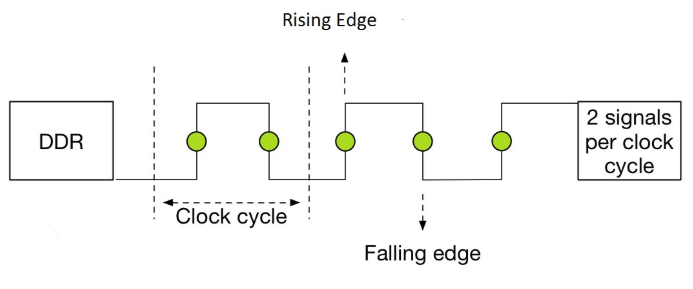
Double Data Rate (DDR) refers to a high-speed memory transfer technology widely used in electronic devices to enhance data transmission efficiency. Unlike Single Data Rate (SDR) memory, which only transmits data on one edge of the clock signal, DDR enables data transfer on both the rising and falling edges of the clock cycle. This fundamental design upgrade doubles the effective data throughput without increasing the clock frequency, making DDR the standard memory solution for most computing and electronic systems today.
2.2Working principle
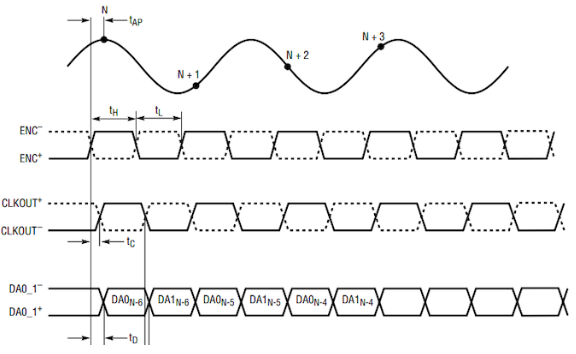
The core working principle of DDR lies in its ability to utilize both edges of the clock signal. In a typical clock cycle, an SDR memory module transmits data once,while DDR memory captures and transmits data twice—once when the clock signal transitions from low to high and again when it shifts from high to low.This is achieved through advanced signal synchronization and data latching circuits within the memory chip.The memory controller coordinates with the DDR module to ensure precise timing,enabling seamless data transfer on both edges and effectively doubling the data bandwidth relative to SDR at the same clock speed.
2.3Benefits
Doubled Data Throughput:The most significant advantage is the doubled effective data rate compared to SDR,significantly improving the speed of data exchange between memory and the processor, and enhancing overall system performance.
Energy Efficiency:Subsequent generations of DDR have continuously optimized power consumption.By reducing operating voltage,DDR minimizes power loss while maintaining high performance, extending battery life in portable devices.
Scalability:DDR technology has undergone multiple generations of iteration,with continuous improvements in maximum capacity, speed,and stability.This scalability allows it to adapt to the evolving needs of various electronic systems, from low-power embedded devices to high-performance servers.
Reliability:Advanced error correction, signal integrity enhancement, and thermal management features in modern DDR modules ensure stable operation even in high-load and harsh environments, reducing data transmission errors.
Wide Compatibility:Each generation of DDR follows standardized interface specifications,enabling seamless integration with corresponding motherboards, processors, and other components, facilitating system design and upgrades.
3.1 DDR1:
Launch Year: Early 2000s
Clock Speed: 100–200MHz
Effective Data Rate: 200–400MT/s
Voltage: 2.5V
Max Single Capacity: Up to 1GB
Status: Obsolete, replaced by newer generations; previously used in early desktop and laptop computers.

3.2 DDR2:
Launch Year: Mid-2000s
Clock Speed: 200–400MHz
Effective Data Rate: 400–800MT/s
Voltage: 1.8V (lower than DDR1)
Max Single Capacity: Up to 4GB
Status: Mostly obsolete; was mainstream for mid-2000s computing devices, offering improved speed and lower power consumption.
3.3 DDR3:
Launch Year: Late 2000s
Clock Speed: 400–1066MHz
Effective Data Rate: 800–2133MT/s
Voltage: 1.5V (1.35V for low-voltage DDR3L)
Max Single Capacity: Up to 16GB
Status: Still in use in some legacy systems, servers, and embedded devices; balances performance and cost.

3.4 DDR4:
Launch Year: Early 2010s
Clock Speed: 1066–1600MHz
Effective Data Rate: 2133–3200MT/s
Voltage: 1.2V (more energy-efficient)
Max Single Capacity: Up to 64GB
Status: Current mainstream; widely used in modern desktops, laptops, servers, and high-performance embedded systems.

3.5 DDR5:
Launch Year:Mid-2020s
Clock Speed:2400MHz and above
Effective Data Rate: 4800MT/s and higher
Voltage:1.1V (lowest power consumption to date)
Max Single Capacity:Up to 256GB
Status:Latest generation;targeted at high-performance computing, data centers, and advanced consumer electronics, offering higher bandwidth and capacity.

Consumer Electronics:Desktops,laptops,tablets,smart TVs,and gaming consoles—DDR4/DDR5 provide high-speed memory support for multitasking,video editing, gaming, and media streaming.
Data Centers & Servers:High-capacity DDR4/DDR5 modules meet the massive data storage and rapid access needs of cloud computing, big data analytics, and server virtualization, ensuring stable and efficient operation.
Embedded Systems:Industrial control modules,IoT devices, and automotive electronics—DDR3/DDR4 offer reliable performance and low power consumption for embedded applications.
High-Performance Computing (HPC):Supercomputers,scientific research equipment, and AI accelerators—DDR5’s high bandwidth and large capacity support complex calculations and data processing.
Mobile Devices:Premium smartphones and tablets—low-voltage DDR variants balance speed and power efficiency,extending battery life while enabling smooth multitasking.
Networking Equipment:Routers, switches, and 5G base stations—DDR modules provide fast data buffer and processing capabilities, ensuring high-speed data transmission in network infrastructure.
Double Data Rate (DDR) technology has revolutionized data transmission in electronic systems through its dual-edge clocking mechanism, delivering doubled throughput, improved energy efficiency, and strong scalability.As demands for higher speed and larger capacity grow, DDR technology will continue to evolve, driving innovation in electronic systems worldwide.
Industry Information