
Home > Industry Information > What Is A Gyroscope Sensor
This passage provides a comprehensive introduction to gyroscope sensors, a key type of motion-sensing device widely used in modern technology. It starts with the basic definition,components,and core characteristics of gyroscope sensors,then details their classification based on working principles and structural differences. Additionally, it explores the diverse application fields of gyroscope sensors across industries such as consumer electronics, automotive, and aerospace.
2.1What is a gyroscope sensor
A gyroscope sensor is an electronic device designed to detect and measure angular velocity—the rate of rotation around a specific axis (x, y, or z-axis) in three-dimensional space. Unlike accelerometers that measure linear acceleration, gyroscope sensors focus on rotational motion, enabling precise tracking of orientation, tilt, and spin. This capability is rooted in the conservation of angular momentum—a physical principle that states a rotating object will maintain its rotational axis unless acted upon by an external torque, which forms the basis for the sensor’s operation.
2.2Component
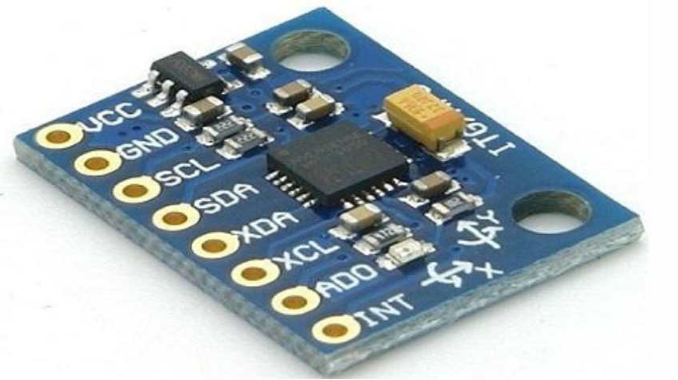
Sensing Element:The core component that responds to angular velocity.In mechanical gyroscopes,this is typically a spinning rotor mounted on gimbals.In modern MEMS (Micro-Electro-Mechanical Systems) gyroscopes, it is a tiny oscillating structure fabricated on a silicon chip.
Actuation Mechanism:Responsible for driving the sensing element.For MEMS gyroscopes,this often involves piezoelectric or electrostatic actuators that set the sensing mass into periodic oscillation.
Detection Circuitry:Converts the mechanical motion of the sensing element into electrical signals. This includes transducers that measure changes in parameters like capacitance or voltage caused by rotational motion,and signal amplifiers that strengthen the weak output signals for further processing.
Signal Processing Unit:Analyzes the electrical signals from the detection circuitry, calibrates for errors,and outputs a digital or analog signal that represents the measured angular velocity.
2.3Characteristics
Angular Velocity Range:The maximum and minimum rate of rotation the sensor can accurately measure.Ranges vary widely—from a few degrees per second (°/s) for precision applications to thousands of °/s for high-speed motion tracking.
Accuracy and Drift:Accuracy refers to how closely the sensor’s output matches the actual angular velocity.Drift is a key performance metric, describing the gradual deviation of the sensor’s output from the true value over time.MEMS gyroscopes typically have lower drift than mechanical ones, with advanced models offering drift rates as low as 0.1 °/hour.
Response Time:The time it takes for the sensor to detect a change in angular velocity and output a corresponding signal.Fast response times are critical for real-time applications like automotive stability control.
Size and Weight:MEMS gyroscopes are ultra-compact and lightweight,making them ideal for miniaturized devices like smartphones and wearables.Traditional mechanical gyroscopes, by contrast,are larger and heavier, limiting their use to larger systems.
Power Consumption:MEMS gyroscopes consume very little power,which is essential for battery-powered devices.Mechanical gyroscopes, with their moving parts, require more power to operate.
3.1Mechanical Gyroscopes
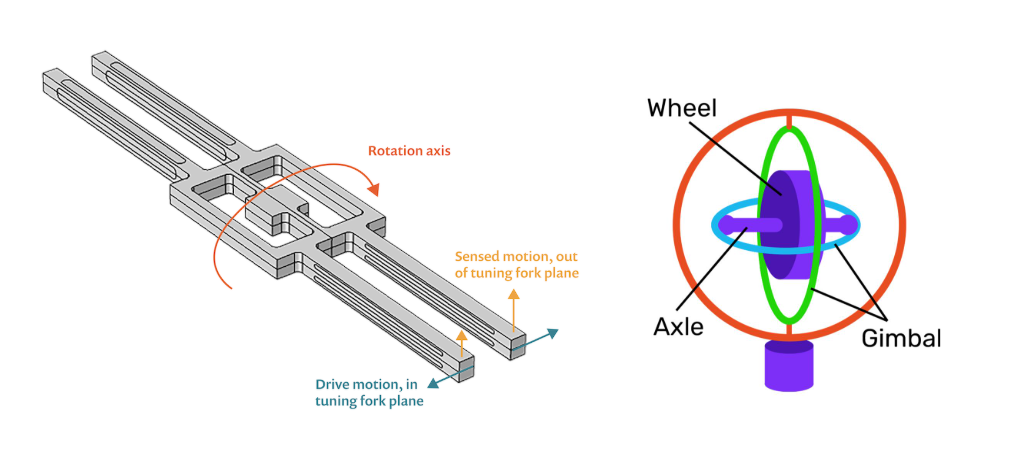
Tuning Fork Gyroscopes:A simple mechanical design with two rotating prongs (tuning forks) that vibrate in opposite directions; rotation causes a change in vibration amplitude, which is measured.
Gimbal-Mounted Rotor Gyroscopes:A rotor spins at high speed and is mounted on gimbals (rings) that allow free rotation around multiple axes. Used historically in aircraft navigation but now largely replaced by electronic types due to size and weight.
3.2MEMS Gyroscopes
Capacitive MEMS Gyroscopes:Use changes in capacitance between a vibrating sensing mass and fixed electrodes to detect angular velocity.Widely used in smartphones, tablets, and wearables due to low cost and small size.
Piezoelectric MEMS Gyroscopes:Utilize piezoelectric materials that generate an electric charge when deformed by rotation.Offer high accuracy and are used in automotive and industrial applications.

3.3Optical Gyroscopes
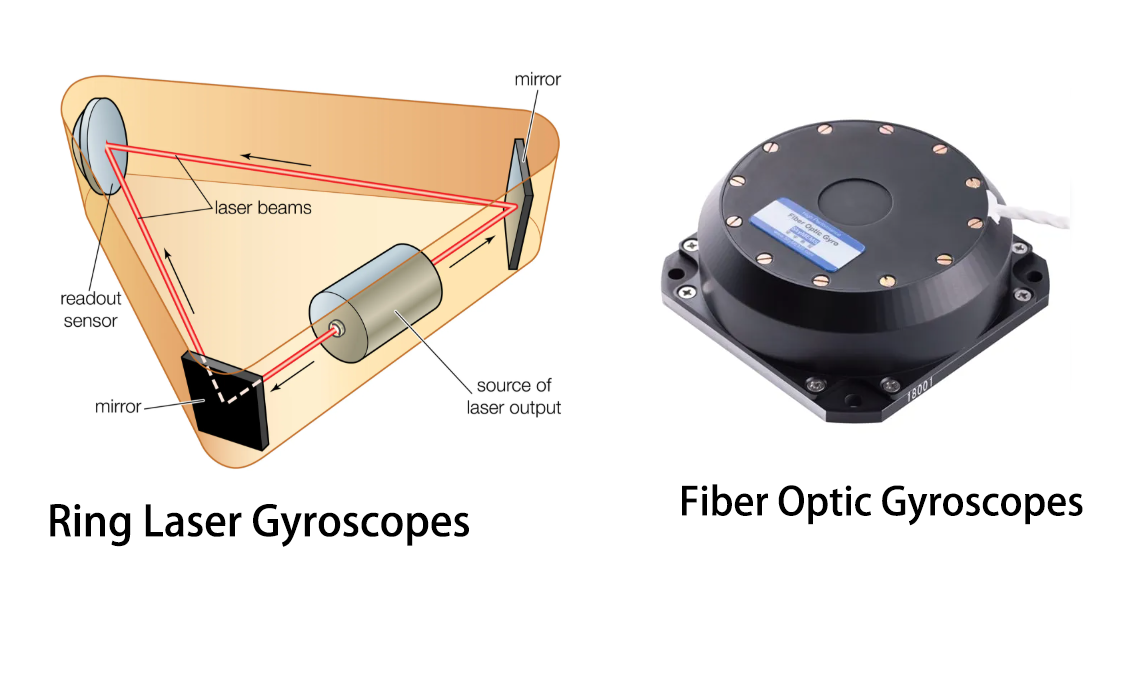
Ring Laser Gyroscopes (RLGs):Use two laser beams circulating in a closed ring (e.g., a triangular or square cavity). The phase shift between the beams is measured to calculate angular velocity. Used in high-precision applications like aircraft navigation and satellite systems.
Fiber Optic Gyroscopes (FOGs):Replace the laser ring with a coiled optical fiber. Light is sent through the fiber in both directions, and the phase shift is detected. FOGs are smaller than RLGs and used in robotics and marine navigation.
4.1Consumer Electronics
Smartphones and Tablets:Used for screen rotation, gaming,and camera stabilization.
Wearable Devices:Integrated into smartwatches and fitness trackers to monitor activity and detect falls by analyzing sudden changes in orientation.
Virtual Reality(VR) and Augmented Reality(AR) Headsets:Provide immersive experiences by tracking head movements in real time,ensuring the virtual/augmented environment aligns with the user’s perspective.
4.2Automotive Industry
Electronic Stability Control (ESC):Works with accelerometers to detect oversteering or understeering,adjusting brake pressure or engine power to prevent skidding.
Advanced Driver-Assistance Systems (ADAS):Used in lane-keeping assist and adaptive cruise control.
In-Vehicle Infotainment (IVI):Enables gesture control for audio or climate settings, where hand rotations are detected to adjust volume or temperature.
4.3Aerospace and Defense
Aircraft Navigation:Optical gyroscopes (RLGs/FOGs) are used in inertial navigation systems (INS) to track the aircraft’s position,altitude,and heading,especially when GPS signals are unavailable.
Satellites and Spacecraft:Monitor the orientation of satellites for precise communication and adjust the spacecraft’s trajectory during orbit.
4.4Robotics and Industrial Automation
Robotic Arms and Drones:Help robots maintain balance, navigate through complex environments,and perform precise movements.Drones use gyroscopes for stable flight, preventing tilting or spinning during hover or movement.
Industrial Machinery:Used in rotating equipment to monitor rotational speed and detect abnormal vibrations,ensuring safe and efficient operation.
In summary, gyroscope sensors are vital motion-sensing devices that enable precise measurement of angular velocity, playing a crucial role in modern technology. From compact MEMS gyroscopes in smartphones to high-precision optical gyroscopes in aerospace, their diverse designs cater to a wide range of applications across consumer electronics, automotive, robotics, and defense industries.
Industry Information