
Home > Industry Information > What Is An Power Management Integrated Circuits
This passage provides a comprehensive exploration of Power Management Integrated Circuits (PMICs), covering their fundamental definition, structural composition, and critical role in electronic systems. It further details the main types of PMICs, their wide-ranging applications across industries, analyzes their key advantages and inherent disadvantages, and concludes with a summary of their significance in modern electronics.
2.1What is PMIC
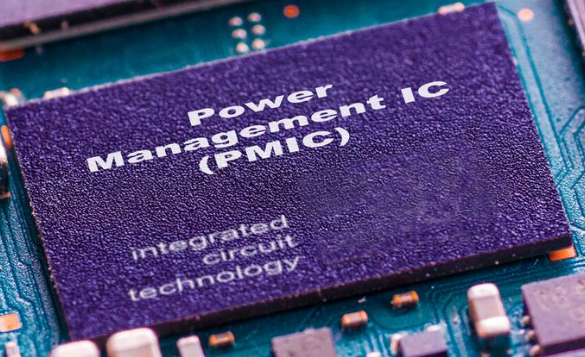
A Power Management Integrated Circuit (PMIC) is a specialized integrated circuit designed to manage and regulate the power supply within electronic devices. It integrates multiple power-related functions into a single chip, eliminating the need for discrete power components and simplifying the power management architecture of electronic systems. PMICs are responsible for converting, distributing, regulating, and monitoring electrical power to ensure stable and efficient operation of various components in a device, such as microprocessors, sensors, and displays.
2.2The structure of PMIC
Power Conversion Units:Include DC-DC converters (buck, boost, buck-boost) and AC-DC converters, which convert input voltage to the specific voltages required by different components in the device.
Voltage Regulators:Such as linear regulators, which maintain a constant output voltage despite fluctuations in input voltage or load current, ensuring stable power supply to sensitive components.
Power Distribution Networks:Distribute the regulated power to various subsystems and components within the electronic device, ensuring each part receives the appropriate power.
Control and Monitoring Circuits:Incorporate microcontrollers or logic circuits to monitor parameters like voltage, current, and temperature. They adjust the operation of conversion and regulation units based on real-time data to optimize performance and protect against faults.
Protection Mechanisms:Include overvoltage protection (OVP), overcurrent protection (OCP), short-circuit protection (SCP), and thermal shutdown, which prevent damage to the PMIC and connected components in abnormal operating conditions.
2.3The importance of PMIC
Ensuring Stable Operation:By regulating voltage and current, PMICs prevent voltage spikes or drops that could cause malfunctions or damage to sensitive electronic components like CPUs and memory chips.
Improving Power Efficiency:Their integrated power conversion and management functions minimize power loss, extending the battery life of portable devices (e.g., smartphones, laptops) and reducing energy consumption in stationary systems.
Simplifying Design and Miniaturization:Integrating multiple power functions into one chip reduces the number of discrete components, saving board space, lowering design complexity, and enabling the miniaturization of electronic devices.
Enhancing System Reliability:Built-in protection mechanisms safeguard the device from electrical faults, increasing the overall reliability and lifespan of the electronic system.
DC-DC Converter PMICs:Focus on converting one DC voltage level to another. They are categorized into buck converters (step-down), boost converters (step-up), and buck-boost converters (step-up/step-down), suitable for applications requiring voltage adjustment, such as powering microprocessors and sensors.

Linear Regulator PMICs:Provide a constant output voltage with low noise and ripple. They are ideal for low-power, noise-sensitive applications like audio circuits, sensors, and communication modules, though they have lower efficiency than DC-DC converters.

Battery Management ICs (BMICs):Specialized for managing rechargeable batteries, including functions like charging control, battery monitoring (state of charge, state of health), and cell balancing. Commonly used in smartphones, laptops, and electric vehicles.

Power Sequencers and Supervisors:Control the order in which different components receive power during system startup and shutdown to prevent damage from inrush current. They also monitor power supply status and trigger reset or shutdown in case of faults, used in servers, industrial controllers, and complex embedded systems.

LED Driver PMICs:Regulate current and voltage for LED lighting systems, ensuring consistent brightness and extending LED lifespan. Applied in automotive lighting, residential lighting, and display backlighting.

Multi-Rail PMICs:Integrate multiple power conversion and regulation channels to supply power to multiple subsystems simultaneously. Designed for complex devices like FPGAs, high-performance CPUs, and IoT gateways that require multiple voltage levels.

Consumer Electronics:Widely used in smartphones, tablets, laptops, and wearables. They manage battery charging, regulate power for processors and displays, and optimize power efficiency to extend battery life.
Automotive Electronics:Applied in electric vehicles (EVs) and hybrid electric vehicles (HEVs) for battery management, motor control, and power distribution to infotainment systems, ADAS (Advanced Driver Assistance Systems), and lighting. They also withstand harsh automotive environments like high temperatures and vibrations.
Industrial Automation:Used in PLCs (Programmable Logic Controllers), motor drives, and industrial sensors. They provide stable power to control circuits, monitor power consumption, and ensure reliable operation in industrial settings.
Telecommunications:Integrated into base stations, routers, and network switches. They regulate power for communication chips, manage backup power supplies, and maintain stable operation to support continuous data transmission.
IoT (Internet of Things) Devices:Essential for low-power IoT sensors and gateways. They optimize power consumption to enable long-term operation on small batteries, supporting applications like smart home devices, environmental monitoring sensors, and asset trackers.
5.1Advantages
High Power Efficiency:Integrated power conversion technologies minimize energy loss, reducing power consumption and extending battery life in portable devices.
Space-Saving and Miniaturization:Combining multiple functions into a single chip reduces the number of discrete components, saving PCB space and enabling smaller, more compact electronic devices.
Simplified System Design:PMICs eliminate the need for complex discrete power management circuits, reducing design time, cost, and potential errors.
Enhanced System Stability and Reliability:Built-in regulation and protection mechanisms ensure stable power supply and protect against electrical faults, improving overall system reliability.
Flexible and Configurable:Many modern PMICs offer programmable parameters (e.g., output voltage, current limits), allowing customization for different application requirements.
5.2Disadvantages
Higher Initial Cost:PMICs often have a higher upfront cost compared to discrete power components, which may be a consideration for low-cost, simple electronic devices.
Limited Customization for Specialized Applications:While configurable, off-the-shelf PMICs may not meet the unique requirements of highly specialized systems, requiring custom-designed PMICs that are more expensive and time-consuming to develop.
Thermal Management Challenges:The integration of multiple functions can lead to high power density, generating significant heat. Effective thermal management (e.g., heat sinks) is required, adding complexity and cost to the system.
Dependency on Supplier Availability:PMICs are specialized components, and supply chain disruptions or discontinuation by manufacturers can lead to production delays for dependent electronic systems.
Complex Debugging and Testing:Troubleshooting issues in integrated PMICs is more complex than with discrete components, as faults may be related to multiple integrated functions.
Power Management Integrated Circuits (PMICs) are indispensable components in modern electronic systems, combining power conversion, regulation, distribution, and protection into a single, efficient chip. While PMICs offer significant advantages in design simplicity and performance, they also present challenges such as higher initial costs and thermal management requirements. As electronic devices continue to evolve toward higher performance, smaller size, and lower power consumption, the role of PMICs will remain critical, with ongoing innovations focused on improving efficiency, flexibility, and adaptability to meet emerging application needs.
Industry Information